Exploitation — Exploiting Weak Players
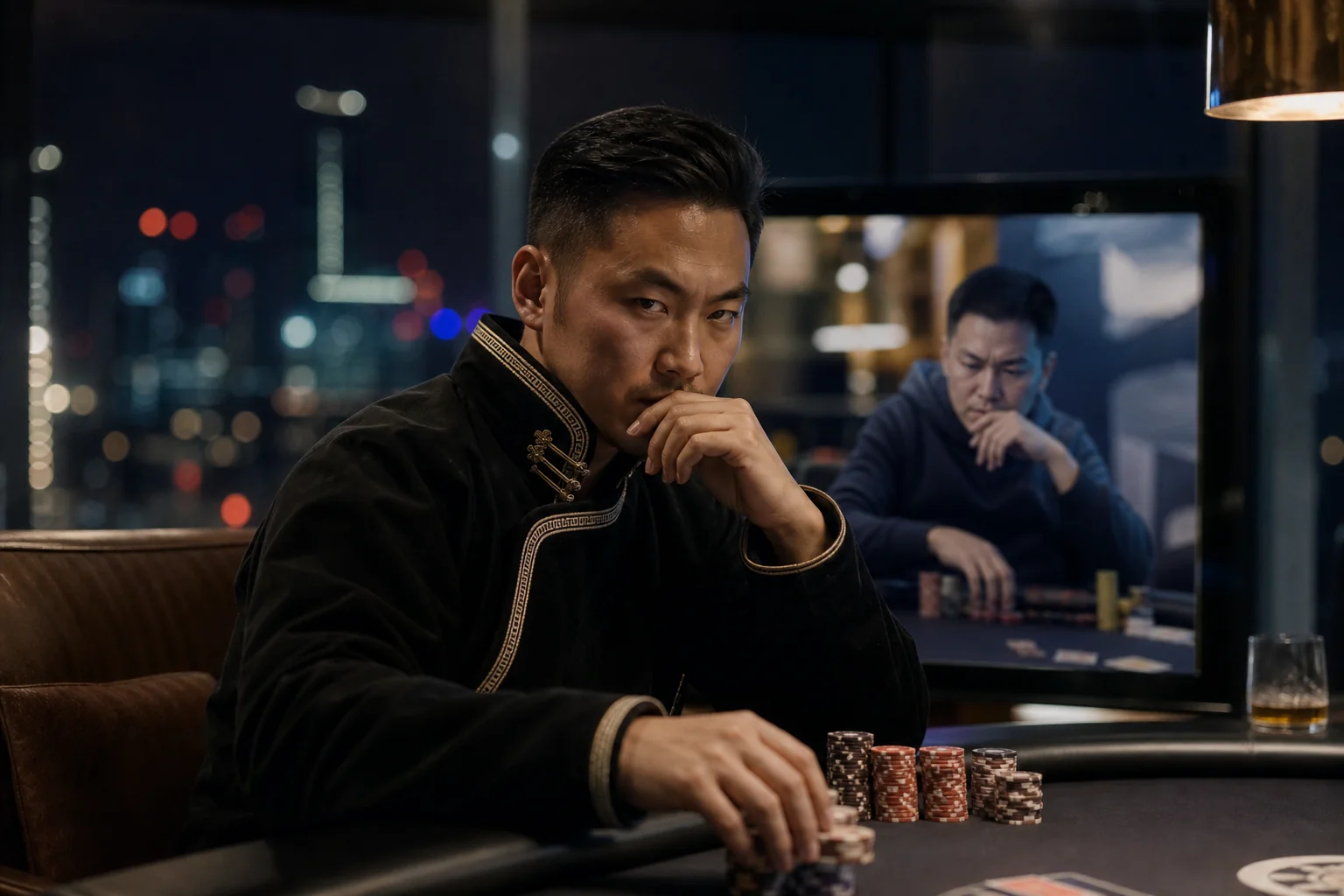
Exploitation means profiting from your opponents' mistakes. Unlike GTO (game theory optimal) play, which seeks an unexploitable balance, exploitation maximizes EV against specific opponents who play predictably. At Baatryn Öröö tables, you will find every player type — learning to identify and adjust to each one is one of the highest-ROI skills in poker.
The principle is straightforward: every player has tendencies. Some fold too much. Some call too much. Some play too passively. Once you identify the leak, you adjust your strategy in the direction that punishes it most. The key is observation before exploitation.
Эхлээд ажиглах
Before you exploit anyone, spend 10–20 hands watching. Note how they bet, when they fold, and how they react to pressure. A HUD with VPIP, PFR, and fold-to-c-bet gives you a head start. Without a HUD, rely on hand notes.
| Player type | Exploit |
|---|---|
| Overfolder (high fold to c-bet) | Bluff more, raise more |
| Overcaller / calling station | Value bet more, bluff less |
| Never folds | Thin value bets, zero bluffs |
| Limper | Iso-raise with strong hands |
One exploit per player. Do not try to simultaneously over-bluff and over-value-bet — pick the adjustment that matches the dominant leak.
Fold to c-bet өндөр
When an opponent's fold-to-c-bet stat is 70% or higher, their postflop defense is too weak. They are folding too many marginal hands on the flop, giving away pots they should contest.
Your adjustment:
- C-bet a wide range on dry boards — even thin value hands and semi-bluffs
- Increase c-bet frequency from the standard 55–65% to closer to 70–80% against this player
- Use smaller sizing (25–33% pot) on dry boards — you do not need large bets to fold a player who folds too much
A player with 80%+ fold-to-c-bet is essentially giving you their stack in small increments every session. See c-bet strategy for sizing and frequency framework.
Overcall station
A calling station is the opposite problem: they call down too wide, reluctant to fold any pair or draw. Bluffing a calling station is one of poker's most common mistakes — they simply will not fold.
Against a calling station:
- Value bet thin — second pair and good kickers often win at showdown
- Size up on the value end — they call large bets with weak holdings
- Bluff frequency = 0 — if they do not fold to a c-bet, they will not fold to a river bluff either
- Exploit them by making them pay to chase their draws and showdown weak hands
The trap players fall into is reverting to bluffs out of frustration after losing a hand to a calling station's lucky draw. Stay disciplined: their EV-negative calls make you money over the long run.
Tight nit
A tight nit plays very few hands and folds to any aggression. Their VPIP is typically 12–18% and their fold-to-3-bet is extremely high.
- Steal often — open-raise from the cutoff and button freely; see steal-resteal for ranges
- 3-bet bluff with caution — nits do not open without strong hands, so they fold to 3-bets regularly — but when they do not fold, they have you beat
- Fold to their bets — when a nit bets or raises with conviction, your medium-strength hand is rarely good
Against nits, position and preflop aggression are your tools. You do not need complex postflop plays — they give you the pot before the board changes much.
Maniac
A maniac raises constantly, barreling every street and pushing opponents off medium-strength hands. They have the opposite problem to a nit: too much aggression, too little discrimination.
Against a maniac:
- Trap with strong hands — check strong hands and let them bet into you; calling down is more profitable than raising immediately
- Call down wider — top pair and even second pair can be the winning hand at showdown
- Do not bluff back — maniacs do not fold to aggression; raising as a bluff against them is burning money
- Be patient — maniacs give chips to patient, value-focused players over the session
The key mental adjustment against a maniac is to widen your calling range and narrow your bluffing range. They do the aggression; you do the calling.
Практик
Three steps to effective exploitation:
- Observe first — watch 10–20 hands before adjusting; one data point is not enough for a reliable read
- One exploit per player — identify the dominant leak and apply one clear counter; mixing multiple adjustments creates confusion
- Build on solid fundamentals — exploitation is a layer on top of baseline strategy, not a replacement for it; see postflop basics first
Over-exploiting is also a risk. If you start three-bet bluffing a tight player every orbit, they adjust. Keep your exploitative plays at a frequency the opponent does not notice — or switch tables when they tighten up.
Түгээмэл асуултууд
Should beginners study GTO or exploitation?
For micro and small stakes poker — where opponents have major, consistent leaks — exploitation produces faster results than GTO study. Learn solid preflop ranges and postflop fundamentals first, then apply exploitation on top. GTO becomes more valuable as opponents improve.
How fast should I adjust at Mongolian tables?
At online micro stakes, player types are consistent across sessions. You can build a reliable read in 30–50 hands. In live play at Baatryn Öröö, some regulars are well-known — exploit your read from the first orbit.
What if my exploit stops working?
Opponents adjust, especially observant regulars. When your bluff frequency has been exploited back (opponents start hero-calling your bluffs), revert to tighter value-only lines and reset. Reading poker ranges explains how to detect when opponents have adapted.